·1 min read·5 view(s)
What a price difference actually costs you
The gap between two listings is rarely the gap you pay. A short accounting of the parts people forget.
A bag is 18,000 yen in Tokyo and the equivalent of 24,000 at home. That is a 6,000 yen difference, and it is almost never what you save.
What sits between the two numbers
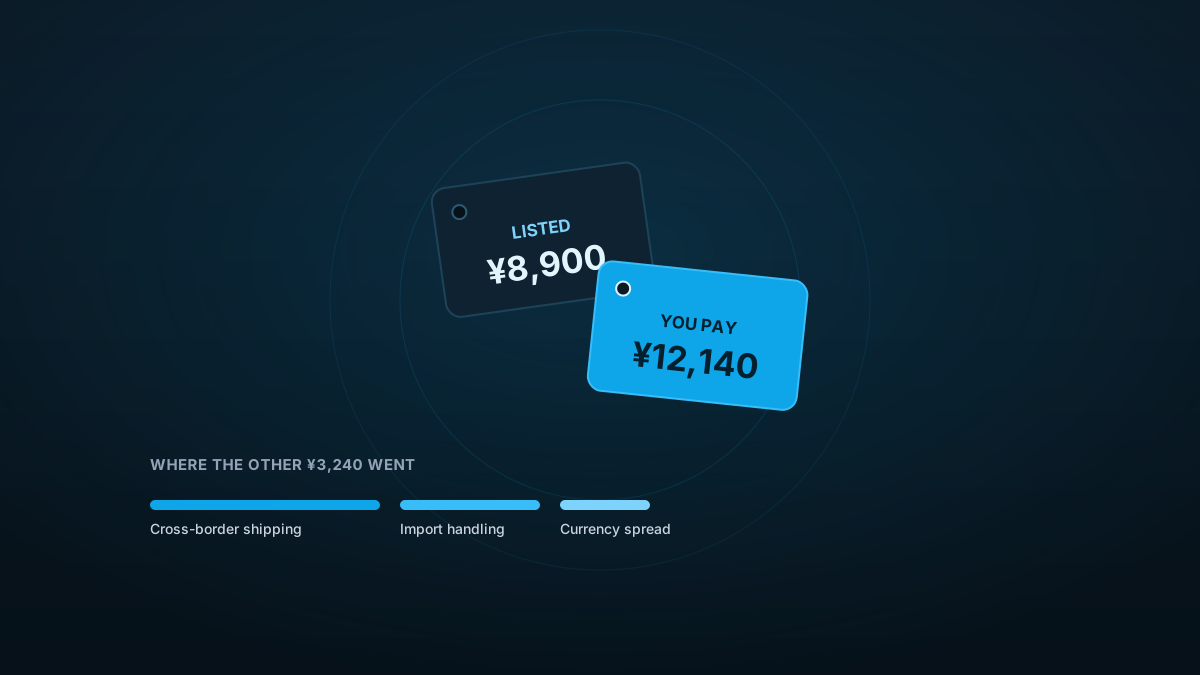
- Shipping, which scales with weight rather than value, so it punishes cheap heavy things and barely touches expensive light ones
- Customs and import tax, which depend on the declared value and the category, not on what you paid
- The card's currency conversion, typically 1.5 to 3 per cent, charged on the foreign amount
- Your time, which is real even when it is unpriced
None of these is large on its own. Together they routinely eat half of a difference that looked obvious.
When the gap is worth crossing
The arithmetic favours things that are light, expensive, and taxed the same either way. It works against anything bulky, anything fragile enough to need insured shipping, and anything where the domestic price already includes a service you would have to arrange yourself.
The honest test is not "is it cheaper there". It is "is it enough cheaper to survive the four lines above".
A worked example
Take the bag. Shipping is 3,000. Import duty at the usual rate on that category adds roughly 1,800. Card conversion on 18,000 yen costs about 400. The 6,000 yen gap is now 800 yen.
Change one variable — a 90,000 yen camera instead — and the same fixed costs barely move while the gap grows twelve times. That is the whole rule, and it is why the answer differs so much by category.
If you want someone already travelling to carry it, that is what shopping requests are for.